In computational learning theory in mathematics, a concept over a domain X is a total Boolean function over X. A concept class is a class of concepts. Concept classes are a subject of computational learning theory. Concept class terminology frequently appears in model theory associated with probably approximately correct (PAC) learning. In this setting, if one takes a set Y as a set of (classifier output) labels, and X is a set of examples, the map c : X → Y {\displaystyle c:X\to Y} , i.e. from examples to classifier labels (where Y = { 0 , 1 } {\displaystyle Y=\{0,1\}} and where c is a subset of X), c is then said to be a concept. A concept class C {\displaystyle C} is then a collection of such concepts. Given a class of concepts C, a subclass D is reachable if there exists a sample s such that D contains exactly those concepts in C that are extensions to s. Not every subclass is reachable. == Background == A sample s {\displaystyle s} is a partial function from X {\displaystyle X} to { 0 , 1 } {\displaystyle \{0,1\}} . Identifying a concept with its characteristic function mapping X {\displaystyle X} to { 0 , 1 } {\displaystyle \{0,1\}} , it is a special case of a sample. Two samples are consistent if they agree on the intersection of their domains. A sample s ′ {\displaystyle s'} extends another sample s {\displaystyle s} if the two are consistent and the domain of s {\displaystyle s} is contained in the domain of s ′ {\displaystyle s'} . == Examples == Suppose that C = S + ( X ) {\displaystyle C=S^{+}(X)} . Then: the subclass { { x } } {\displaystyle \{\{x\}\}} is reachable with the sample s = { ( x , 1 ) } {\displaystyle s=\{(x,1)\}} ; the subclass S + ( Y ) {\displaystyle S^{+}(Y)} for Y ⊆ X {\displaystyle Y\subseteq X} are reachable with a sample that maps the elements of X − Y {\displaystyle X-Y} to zero; the subclass S ( X ) {\displaystyle S(X)} , which consists of the singleton sets, is not reachable. == Applications == Let C {\displaystyle C} be some concept class. For any concept c ∈ C {\displaystyle c\in C} , we call this concept 1 / d {\displaystyle 1/d} -good for a positive integer d {\displaystyle d} if, for all x ∈ X {\displaystyle x\in X} , at least 1 / d {\displaystyle 1/d} of the concepts in C {\displaystyle C} agree with c {\displaystyle c} on the classification of x {\displaystyle x} . The fingerprint dimension F D ( C ) {\displaystyle FD(C)} of the entire concept class C {\displaystyle C} is the least positive integer d {\displaystyle d} such that every reachable subclass C ′ ⊆ C {\displaystyle C'\subseteq C} contains a concept that is 1 / d {\displaystyle 1/d} -good for it. This quantity can be used to bound the minimum number of equivalence queries needed to learn a class of concepts according to the following inequality: F D ( C ) − 1 ≤ # E Q ( C ) ≤ ⌈ F D ( C ) ln ( | C | ) ⌉ {\textstyle FD(C)-1\leq \#EQ(C)\leq \lceil FD(C)\ln(|C|)\rceil } .
Winner-take-all in action selection
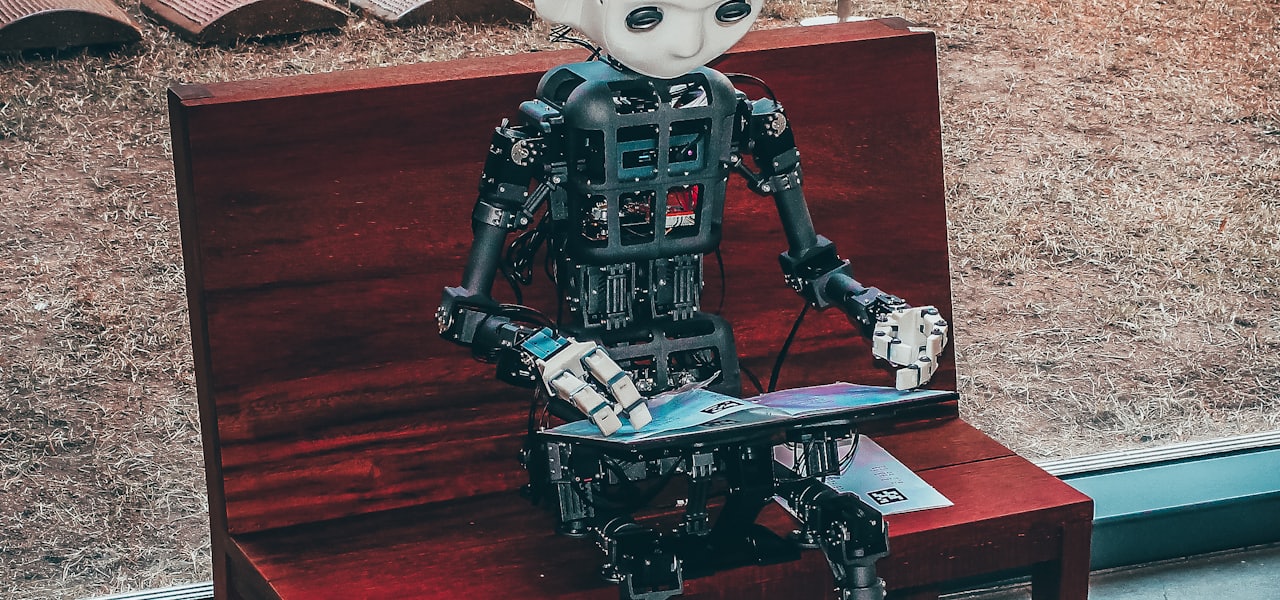
Winner-take-all is a computer science concept that has been widely applied in behavior-based robotics as a method of action selection for intelligent agents. Winner-take-all systems work by connecting modules (task-designated areas) in such a way that when one action is performed it stops all other actions from being performed, so only one action is occurring at a time. The name comes from the idea that the "winner" action takes all of the motor system's power. == History == In the 1980s and 1990s, many roboticists and cognitive scientists were attempting to find speedier and more efficient alternatives to the traditional world modeling method of action selection. In 1982, Jerome A. Feldman and D.H. Ballard published the "Connectionist Models and Their Properties", referencing and explaining winner-take-all as a method of action selection. Feldman's architecture functioned on the simple rule that in a network of interconnected action modules, each module will set its own output to zero if it reads a higher input than its own in any other module. In 1986, Rodney Brooks introduced behavior-based artificial intelligence. Winner-take-all architectures for action selection soon became a common feature of behavior-based robots, because selection occurred at the level of the action modules (bottom-up) rather than at a separate cognitive level (top-down), producing a tight coupling of stimulus and reaction. == Types of winner-take-all architectures == === Hierarchy === In the hierarchical architecture, actions or behaviors are programmed in a high-to-low priority list, with inhibitory connections between all the action modules. The agent performs low-priority behaviors until a higher-priority behavior is stimulated, at which point the higher behavior inhibits all other behaviors and takes over the motor system completely. Prioritized behaviors are usually key to the immediate survival of the agent, while behaviors of lower priority are less time-sensitive. For example, "run away from predator" would be ranked above "sleep." While this architecture allows for clear programming of goals, many roboticists have moved away from the hierarchy because of its inflexibility. === Heterarchy and fully distributed === In the heterarchy and fully distributed architecture, each behavior has a set of pre-conditions to be met before it can be performed, and a set of post-conditions that will be true after the action has been performed. These pre- and post-conditions determine the order in which behaviors must be performed and are used to causally connect action modules. This enables each module to receive input from other modules as well as from the sensors, so modules can recruit each other. For example, if the agent's goal were to reduce thirst, the behavior "drink" would require the pre-condition of having water available, so the module would activate the module in charge of "find water". The activations organize the behaviors into a sequence, even though only one action is performed at a time. The distribution of larger behaviors across modules makes this system flexible and robust to noise. Some critics of this model hold that any existing set of division rules for the predecessor and conflictor connections between modules produce sub-par action selection. In addition, the feedback loop used in the model can in some circumstances lead to improper action selection. === Arbiter and centrally coordinated === In the arbiter and centrally coordinated architecture, the action modules are not connected to each other but to a central arbiter. When behaviors are triggered, they begin "voting" by sending signals to the arbiter, and the behavior with the highest number of votes is selected. In these systems, bias is created through the "voting weight", or how often a module is allowed to vote. Some arbiter systems take a different spin on this type of winner-take-all by using a "compromise" feature in the arbiter. Each module is able to vote for or against each smaller action in a set of actions, and the arbiter selects the action with the most votes, meaning that it benefits the most behavior modules. This can be seen as violating the general rule against creating representations of the world in behavior-based AI, established by Brooks. By performing command fusion, the system is creating a larger composite pool of knowledge than is obtained from the sensors alone, forming a composite inner representation of the environment. Defenders of these systems argue that forbidding world-modeling puts unnecessary constraints on behavior-based robotics, and that agents benefits from forming representations and can still remain reactive.
ECML PKDD
ECML PKDD, the European Conference on Machine Learning Principles and Practice of Knowledge Discovery in Databases, is one of the leading academic conferences on machine learning and knowledge discovery, held in Europe every year. == History == ECML PKDD is a merger of two European conferences, European Conference on Machine Learning (ECML) and European Conference on Principles and Practice of Knowledge Discovery in Databases (PKDD). ECML and PKDD have been co-located since 2001; however, both ECML and PKDD retained their own identity until 2007. For example, the 2007 conference was known as "the 18th European Conference on Machine Learning (ECML) and the 11th European Conference on Principles and Practice of Knowledge Discovery in Databases (PKDD)", or in brief, "ECML/PKDD 2007", and both ECML and PKDD had their own conference proceedings. In 2008 the conferences were merged into one conference, and the division into traditional ECML topics and traditional PKDD topics was removed. The history of ECML dates back to 1986, when the European Working Session on Learning was first held. In 1993 the name of the conference was changed to European Conference on Machine Learning. PKDD was first organised in 1997. Originally PKDD stood for the European Symposium on Principles of Data Mining and Knowledge Discovery from Databases. The name European Conference on Principles and Practice of Knowledge Discovery in Databases was used since 1999. The conference remains highly competitive, consistently maintaining an average acceptance rate of around 25% for the main research track. == Upcoming conferences == == List of past conferences ==
Tamarin Prover
Tamarin Prover is a computer software program for formal verification of cryptographic protocols. It has been used to verify Transport Layer Security 1.3, ISO/IEC 9798, DNP3 Secure Authentication v5, WireGuard, and the PQ3 Messaging Protocol of Apple iMessage. Tamarin is an open source tool, written in Haskell, built as a successor to an older verification tool called Scyther. Tamarin has automatic proof features, but can also be self-guided. In Tamarin lemmas that representing security properties are defined. After changes are made to a protocol, Tamarin can verify if the security properties are maintained. The results of a Tamarin execution will either be a proof that the security property holds within the protocol, an example protocol run where the security property does not hold, or Tamarin could potentially fail to halt.
Mata v. Avianca, Inc.
Mata v. Avianca, Inc. was a U.S. District Court for the Southern District of New York case in which the Court dismissed a personal injury case against the airline Avianca and issued a $5,000 fine to the plaintiffs' lawyers who had submitted fake precedents generated by ChatGPT in their legal briefs. == Background == In February 2022, Roberto Mata filed a personal injury lawsuit in the U.S. District Court for the Southern District of New York against Avianca, alleging that he was injured when a metal serving cart struck his knee during an international flight. The plaintiff's lawyers used ChatGPT to generate a legal motion, which contained numerous fake legal cases involving fictitious airlines with fabricated quotations and internal citations. Avianca's lawyers notified the Court that they had been "unable to locate" a few legal cases cited in the legal motion. The Court could not locate the cases either and ordered the plaintiff's lawyers to provide copies of the cited legal cases. Mata's lawyers provided copies of documents purportedly containing all but one of the legal cases, after ChatGPT assured that the cases "indeed exist" and "can be found in reputable legal databases such as LexisNexis and Westlaw." == Opinion == In May 2023, Judge P. Kevin Castel dismissed the personal injury case against Avianca and ordered the plaintiff's attorneys to pay a $5,000 fine. Judge Castel noted numerous inconsistencies in the opinion summaries, describing one of the legal analyses as "gibberish." Judge Castel held that Mata's lawyers had acted with "subjective bad faith" sufficient for sanctions under Federal Rule of Civil Procedure Rule 11. == Impact == In July 2024, the American Bar Association issued its first formal ethics opinion on the responsibilities of lawyers using generative AI (GAI). The 15-page opinion outlines how the Rules of Professional Conduct apply to the use of GAI in the practice of law. Experts caution that lawyers cannot reasonably rely on the accuracy, completeness, or validity of content generated by GAI tools. Due to the continued usage of GAI in the practice of law, Mata has been described as a landmark case by legal professionals, as it is frequently cited by courts in cases where usage of GAI during the course of proceedings leads to the creation and citation of nonexistent caselaw.
Digital image correlation and tracking
Digital image correlation and tracking is an optical method that employs tracking and image registration techniques for accurate 2D and 3D measurements of changes in 2D images or 3D volumes. This method is often used to measure full-field displacement and strains, and it is widely applied in many areas of science and engineering. Compared to strain gauges and extensometers, digital image correlation methods provide finer details about deformation, due to the ability to provide both local and average data. == Overview == Digital image correlation (DIC) techniques have been increasing in popularity, especially in micro- and nano-scale mechanical testing applications due to their relative ease of implementation and use. Advances in computer technology and digital cameras have been the enabling technologies for this method and while white-light optics has been the predominant approach, DIC can be and has been extended to almost any imaging technology. The concept of using cross-correlation to measure shifts in datasets has been known for a long time, and it has been applied to digital images since at least the early 1970s. The present-day applications are almost innumerable, including image analysis, image compression, velocimetry, and strain estimation. Much early work in DIC in the field of mechanics was led by researchers at the University of South Carolina in the early 1980s and has been optimized and improved in recent years. Commonly, DIC relies on finding the maximum of the correlation array between pixel intensity array subsets on two or more corresponding images, which gives the integer translational shift between them. It is also possible to estimate shifts to a finer resolution than the resolution of the original images, which is often called "sub-pixel" registration because the measured shift is smaller than an integer pixel unit. For sub-pixel interpolation of the shift, other methods do not simply maximize the correlation coefficient. An iterative approach can also be used to maximize the interpolated correlation coefficient by using non-linear optimization techniques. The non-linear optimization approach tends to be conceptually simpler and can handle large deformations more accurately, but as with most nonlinear optimization techniques, it is slower. The two-dimensional discrete cross correlation r i j {\displaystyle r_{ij}} can be defined in several ways, one possibility being: r i j = ∑ m ∑ n [ f ( m + i , n + j ) − f ¯ ] [ g ( m , n ) − g ¯ ] ∑ m ∑ n [ f ( m , n ) − f ¯ ] 2 ∑ m ∑ n [ g ( m , n ) − g ¯ ] 2 . {\displaystyle r_{ij}={\frac {\sum _{m}\sum _{n}[f(m+i,n+j)-{\bar {f}}][g(m,n)-{\bar {g}}]}{\sqrt {\sum _{m}\sum _{n}{[f(m,n)-{\bar {f}}]^{2}}\sum _{m}\sum _{n}{[g(m,n)-{\bar {g}}]^{2}}}}}.} Here f(m, n) is the pixel intensity or the gray-scale value at a point (m, n) in the original image, g(m, n) is the gray-scale value at a point (m, n) in the translated image, f ¯ {\displaystyle {\bar {f}}} and g ¯ {\displaystyle {\bar {g}}} are mean values of the intensity matrices f and g respectively. However, in practical applications, the correlation array is usually computed using Fourier-transform methods, since the fast Fourier transform is a much faster method than directly computing the correlation. F = F { f } , G = F { g } . {\displaystyle \mathbf {F} ={\mathcal {F}}\{f\},\quad \mathbf {G} ={\mathcal {F}}\{g\}.} Then taking the complex conjugate of the second result and multiplying the Fourier transforms together elementwise, we obtain the Fourier transform of the correlogram, R {\displaystyle \ R} : R = F ∘ G ∗ , {\displaystyle R=\mathbf {F} \circ \mathbf {G} ^{},} where ∘ {\displaystyle \circ } is the Hadamard product (entry-wise product). It is also fairly common to normalize the magnitudes to unity at this point, which results in a variation called phase correlation. Then the cross-correlation is obtained by applying the inverse Fourier transform: r = F − 1 { R } . {\displaystyle \ r={\mathcal {F}}^{-1}\{R\}.} At this point, the coordinates of the maximum of r i j {\displaystyle r_{ij}} give the integer shift: ( Δ x , Δ y ) = arg max ( i , j ) { r } . {\displaystyle (\Delta x,\Delta y)=\arg \max _{(i,j)}\{r\}.} == Deformation mapping == For deformation mapping, the mapping function that relates the images can be derived from comparing a set of subwindow pairs over the whole images. (Figure 1). The coordinates or grid points (xi, yj) and (xi, yj) are related by the translations that occur between the two images. If the deformation is small and perpendicular to the optical axis of the camera, then the relation between (xi, yj) and (xi, yj) can be approximated by a 2D affine transformation such as: x ∗ = x + u + ∂ u ∂ x Δ x + ∂ u ∂ y Δ y , {\displaystyle x^{}=x+u+{\frac {\partial u}{\partial x}}\Delta x+{\frac {\partial u}{\partial y}}\Delta y,} y ∗ = y + v + ∂ v ∂ x Δ x + ∂ v ∂ y Δ y . {\displaystyle y^{}=y+v+{\frac {\partial v}{\partial x}}\Delta x+{\frac {\partial v}{\partial y}}\Delta y.} Here u and v are translations of the center of the sub-image in the X and Y directions respectively. The distances from the center of the sub-image to the point (x, y) are denoted by Δ x {\displaystyle \Delta x} and Δ y {\displaystyle \Delta y} . Thus, the correlation coefficient rij is a function of displacement components (u, v) and displacement gradients ∂ u ∂ x , ∂ u ∂ y , ∂ v ∂ x , ∂ v ∂ y . {\displaystyle {\frac {\partial u}{\partial x}},{\frac {\partial u}{\partial y}},{\frac {\partial v}{\partial x}},{\frac {\partial v}{\partial y}}.} DIC has proven to be very effective at mapping deformation in macroscopic mechanical testing, where the application of specular markers (e.g. paint, toner powder) or surface finishes from machining and polishing provide the needed contrast to correlate images well. However, these methods for applying surface contrast do not extend to the application of free-standing thin films for several reasons. First, vapor deposition at normal temperatures on semiconductor grade substrates results in mirror-finish quality films with RMS roughnesses that are typically on the order of several nanometers. No subsequent polishing or finishing steps are required, and unless electron imaging techniques are employed that can resolve microstructural features, the films do not possess enough useful surface contrast to adequately correlate images. Typically this challenge can be circumvented by applying paint that results in a random speckle pattern on the surface, although the large and turbulent forces resulting from either spraying or applying paint to the surface of a free-standing thin film are too high and would break the specimens. In addition, the sizes of individual paint particles are on the order of μms, while the film thickness is only several hundred nanometers, which would be analogous to supporting a large boulder on a thin sheet of paper. == Digital volume correlation == Digital Volume Correlation (DVC, and sometimes called Volumetric-DIC) extends the 2D-DIC algorithms into three dimensions to calculate the full-field 3D deformation from a pair of 3D images. This technique is distinct from 3D-DIC, which only calculates the 3D deformation of an exterior surface using conventional optical images. The DVC algorithm is able to track full-field displacement information in the form of voxels instead of pixels. The theory is similar to above except that another dimension is added: the z-dimension. The displacement is calculated from the correlation of 3D subsets of the reference and deformed volumetric images, which is analogous to the correlation of 2D subsets described above. DVC can be performed using volumetric image datasets. These images can be obtained using confocal microscopy, X-ray computed tomography, Magnetic Resonance Imaging or other techniques. Similar to the other DIC techniques, the images must exhibit a distinct, high-contrast 3D "speckle pattern" to ensure accurate displacement measurement. DVC was first developed in 1999 to study the deformation of trabecular bone using X-ray computed tomography images. Since then, applications of DVC have grown to include granular materials, metals, foams, composites and biological materials. To date it has been used with images acquired by MRI imaging, Computer Tomography (CT), micro-CT, confocal microscopy, and lightsheet microscopy. DVC is currently considered to be ideal in the research world for 3D quantification of local displacements, strains, and stress in biological specimens. It is preferred because of the non-invasiveness of the method over traditional experimental methods. Two of the key challenges are improving the speed and reliability of the DVC measurement. The 3D imaging techniques produce noisier images than conventional 2D optical images, which reduces the quality of the displacement measurement. Computational speed is restricted by the file sizes of 3D images, which are significantly larger than 2D images. For example, an
Eclipse Phase
Eclipse Phase is a science fiction horror role-playing game with transhumanist themes. It was originally published by Catalyst Game Labs, and is now published by the game's creators, Posthuman Studios, and is released under a Creative Commons license. == Setting == Eclipse Phase is a science fiction horror role-playing game with transhumanist, post-apocalyptic, and conspiracy themes. The game is set after a World War III project to create artificial intelligence known as TITANs has gone rogue, resulting in the deaths of over 90% of the inhabitants of Earth. Earth is subsequently abandoned, and existing colonies throughout the Solar System are expanded to accommodate the refugees. The setting explores a spectrum of socioeconomic systems in each of these colonies: A capitalist / republican system exists in the Inner System (Mars, the Moon, and Mercury), under the Planetary Consortium, a corporate body which allows the election of representatives but whose shareholders are nominally most powerful. An Extropian/Propertarian system is established in the Asteroid Belt. The Extropians are split into two subfactions, an anarcho-capitalist group, more closely related to the Hypercapitalists, and a mutualist group, related closely to the Anarchists. A military oligarchy rules the moons around Jupiter. An alliance of Scandinavia-style social democracy and Collectivist anarchism are dominant in the Outer System. From there, the setting explores various scientific advances, extrapolated far into the future. Nanotechnology, terraforming, Zero-G living, upgrading animal sapience, and reputation systems are all used as plot points and background. With all of this, the game encourages players to confront existential threats like aliens, weapons of mass destruction, Exsurgent Virus outbreaks, and political unrest. == Mechanics == Eclipse Phase uses a simple roll-under percentile die system for task resolution. Unlike most percentile systems, a roll of 00 does not count as a 100. In addition, any roll of a double (11, 22, 33 etc.) is a critical. If the double is under the target number it is a critical success, while being over the target number constitutes a critical failure. For damage resolution (whether physical damage caused by injury or mental stress caused by traumatic events), players roll a designated number of ten-sided dice and add the values together, along with any modifiers. == Books == === Publications === Eclipse Phase (Core Rulebook) (2009) ISBN 978-0-9845835-0-8 GM Screen (2010) Sunward, Boyle, Rob; Knevitt, James (2010). Sunward : the inner system, a location sourcebook for Eclipse Phase. UK: Cubicle 7. ISBN 978-0984583522. Gatecrashing Boyle, Rob; Graham, Jack; Rosenberg, Aaron (2011). Gatecrashing. UK: Cubicle 7. ISBN 978-0984583539. Panopticon Volume 1: Habitats, Surveillance, Uplifts (2011) (2011) Rimward (2012) Transhuman: The Eclipse Phase Player’s Guide (2013) Firewall (2015) X-Risks (2016) Eclipse Phase (Core Rulebook, Second Edition) (2019) === Nano Ops === Nano Op: Grinder Nano Op: All That Glitters Nano Op: Better on the Inside Nano Op: Binge Nano Op: Body Count == Creative Commons License == The Eclipse Phase roleplaying game was released under a Creative Commons Attribution-Noncommercial-Share Alike 3.0 license, and newer printings have updated to the Creative Commons Attribution-Noncommercial-Share Alike 4.0 license; the text found on the Eclipse Phase website is licensed under the Creative Commons Attribution-Noncommercial-Share Alike 4.0 License. As stated on their website, the publishers encourage players and gamemasters to recreate, alter, and "remix" the material for non-commercial purposes as long as Posthuman Studios is attributed, and any derivatives are licensed under the same Creative Commons Attribution-Noncommercial-Share Alike 4.0 License. Further, copying and sharing the game's electronic versions non-commercially is legal. == Reception == In 2010, it won the 36th Annual Origins award for Best Roleplaying Game of 2009. It also won three 2010 ENnie awards: Gold for Best Writing, Silver for Best Cover Art, and Silver for Product of the Year.