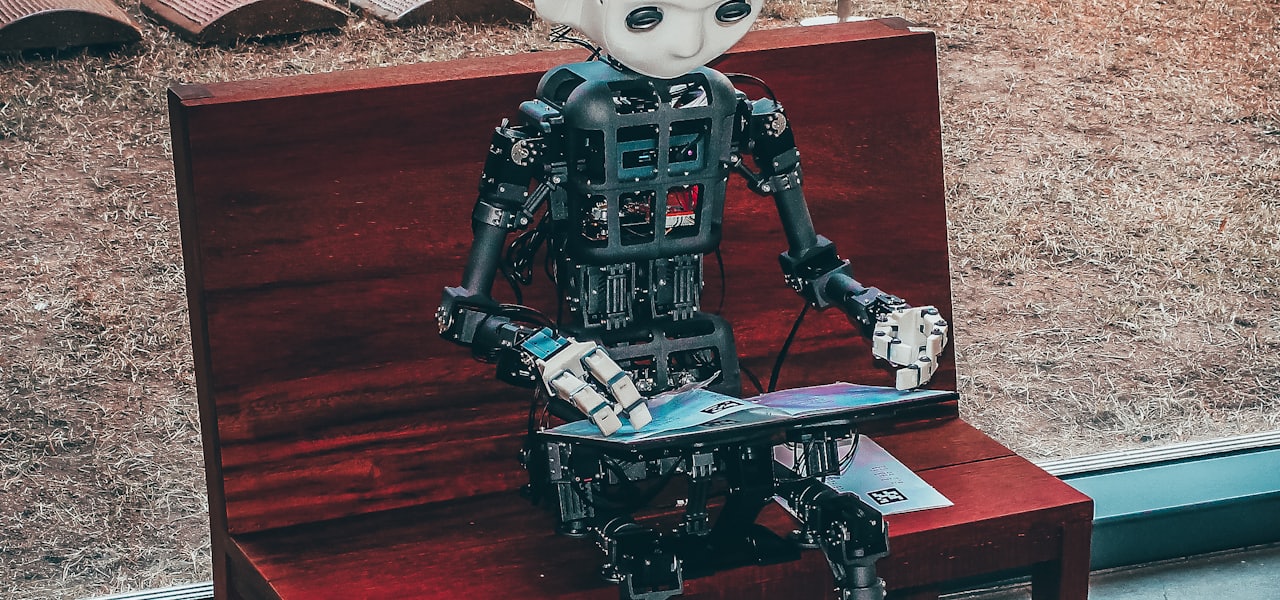
Trying to pick the best AI text-to-image tool? An AI text-to-image tool is software that uses machine learning to help you get more done — it scales effortlessly from a single task to thousands. The best picks balance beginner-friendly simplicity with the depth power users need, and they ship updates often. Whether you are a beginner or a pro, the right AI text-to-image tool slots into your workflow and pays for itself fast. This guide breaks down the top picks, their pros and cons, and who each one is best for.
Coda (document editor)
Coda is a cloud-based multi-user document editor. == Features == Coda is a document editor that provides features from spreadsheets, presentation documents, word processor files, and apps. Possible uses for Coda documents include using them as a wiki, database, or project management tool. Coda has built a formula system, much like spreadsheets commonly have, but in Coda documents, formulas can be used anywhere within the document, and can link to things that aren't just cells, including other documents, calendars or graphs. Coda also has the ability to integrate with custom third-party services, and has automations. It has offered $1 million in grants for developers that create such integrations. == Development == Coda Project, Inc. was founded by Shishir Mehrotra and Alex DeNeui in June 2014. Having met at MIT, they developed the project mostly privately before announcing a public beta in October 2017. The company was named Coda, which is an anadrome for “a doc”. Coda raised $60 million in venture capital funding over two rounds by 2017. The Coda software came out of beta in February 2019. Version 1.0 had an improved user interface, new features for folders and workspaces, and permission levels for accessing files. Coda raised another $80 million in 2020, and $100 million in 2021. The 2021 funding brought Coda's valuation to $1.4 billion, making it a unicorn. In December 2024, Coda was acquired by Grammarly in an all-stock deal for an undisclosed amount. In October 2025, Grammarly rebranded as Superhuman, incorporating Coda as a core product within the new Superhuman productivity suite alongside Grammarly's writing tools, Superhuman Mail, and a new AI assistant called Superhuman Go.
Gödel machine
A Gödel machine is a hypothetical self-improving computer program that solves problems in an optimal way. It uses a recursive self-improvement protocol in which it rewrites its own code when it can prove the new code provides a better strategy. The machine was invented by Jürgen Schmidhuber (first proposed in 2003), but is named after Kurt Gödel who inspired the mathematical theories. The Gödel machine is often discussed when dealing with issues of meta-learning, also known as "learning to learn." Applications include automating human design decisions and transfer of knowledge between multiple related tasks, and may lead to design of more robust and general learning architectures. Though theoretically possible, no full implementation has been created. The Gödel machine is often compared with Marcus Hutter's AIXI, another formal specification for an artificial general intelligence. Schmidhuber points out that the Gödel machine could start out by implementing AIXItl as its initial sub-program, and self-modify after it finds proof that another algorithm for its search code will be better. == Limitations == Traditional problems solved by a computer only require one input and provide some output. Computers of this sort had their initial algorithm hardwired. This does not take into account the dynamic natural environment, and thus was a goal for the Gödel machine to overcome. The Gödel machine has limitations of its own, however. According to Gödel's First Incompleteness Theorem, any formal system that encompasses arithmetic is either flawed or allows for statements that cannot be proved in the system. Hence even a Gödel machine with unlimited computational resources must ignore those self-improvements whose effectiveness it cannot prove. == Variables of interest == There are three variables that are particularly useful in the run time of the Gödel machine. At some time t {\displaystyle t} , the variable time {\displaystyle {\text{time}}} will have the binary equivalent of t {\displaystyle t} . This is incremented steadily throughout the run time of the machine. Any input meant for the Gödel machine from the natural environment is stored in variable x {\displaystyle x} . It is likely the case that x {\displaystyle x} will hold different values for different values of variable time {\displaystyle {\text{time}}} . The outputs of the Gödel machine are stored in variable y {\displaystyle y} , where y ( t ) {\displaystyle y(t)} would be the output bit-string at some time t {\displaystyle t} . At any given time t {\displaystyle t} , where ( 1 ≤ t ≤ T ) {\displaystyle (1\leq t\leq T)} , the goal is to maximize future success or utility. A typical utility function follows the pattern u ( s , E n v ) : S × E → R {\displaystyle u(s,\mathrm {Env} ):S\times E\rightarrow \mathbb {R} } : u ( s , E n v ) = E μ [ ∑ τ = time T r ( τ ) ∣ s , E n v ] {\displaystyle u(s,\mathrm {Env} )=E_{\mu }{\Bigg [}\sum _{\tau ={\text{time}}}^{T}r(\tau )\mid s,\mathrm {Env} {\Bigg ]}} where r ( t ) {\displaystyle r(t)} is a real-valued reward input (encoded within s ( t ) {\displaystyle s(t)} ) at time t {\displaystyle t} , E μ [ ⋅ ∣ ⋅ ] {\displaystyle E_{\mu }[\cdot \mid \cdot ]} denotes the conditional expectation operator with respect to some possibly unknown distribution μ {\displaystyle \mu } from a set M {\displaystyle M} of possible distributions ( M {\displaystyle M} reflects whatever is known about the possibly probabilistic reactions of the environment), and the above-mentioned time = time ( s ) {\displaystyle {\text{time}}=\operatorname {time} (s)} is a function of state s {\displaystyle s} which uniquely identifies the current cycle. Note that we take into account the possibility of extending the expected lifespan through appropriate actions. == Instructions used by proof techniques == The nature of the six proof-modifying instructions below makes it impossible to insert an incorrect theorem into proof, thus trivializing proof verification. === get-axiom(n) === Appends the n-th axiom as a theorem to the current theorem sequence. Below is the initial axiom scheme: Hardware Axioms formally specify how components of the machine could change from one cycle to the next. Reward Axioms define the computational cost of hardware instruction and the physical cost of output actions. Related Axioms also define the lifetime of the Gödel machine as scalar quantities representing all rewards/costs. Environment Axioms restrict the way new inputs x are produced from the environment, based on previous sequences of inputs y. Uncertainty Axioms/String Manipulation Axioms are standard axioms for arithmetic, calculus, probability theory, and string manipulation that allow for the construction of proofs related to future variable values within the Gödel machine. Initial State Axioms contain information about how to reconstruct parts or all of the initial state. Utility Axioms describe the overall goal in the form of utility function u. === apply-rule(k, m, n) === Takes in the index k of an inference rule (such as Modus tollens, Modus ponens), and attempts to apply it to the two previously proved theorems m and n. The resulting theorem is then added to the proof. === delete-theorem(m) === Deletes the theorem stored at index m in the current proof. This helps to mitigate storage constraints caused by redundant and unnecessary theorems. Deleted theorems can no longer be referenced by the above apply-rule function. === set-switchprog(m, n) === Replaces switchprog S pm:n, provided it is a non-empty substring of S p. === check() === Verifies whether the goal of the proof search has been reached. A target theorem states that given the current axiomatized utility function u (Item 1f), the utility of a switch from p to the current switchprog would be higher than the utility of continuing the execution of p (which would keep searching for alternative switchprogs). === state2theorem(m, n) === Takes in two arguments, m and n, and attempts to convert the contents of Sm:n into a theorem. == Example applications == === Time-limited NP-hard optimization === The initial input to the Gödel machine is the representation of a connected graph with a large number of nodes linked by edges of various lengths. Within given time T it should find a cyclic path connecting all nodes. The only real-valued reward will occur at time T. It equals 1 divided by the length of the best path found so far (0 if none was found). There are no other inputs. The by-product of maximizing expected reward is to find the shortest path findable within the limited time, given the initial bias. === Fast theorem proving === Prove or disprove as quickly as possible that all even integers > 2 are the sum of two primes (Goldbach’s conjecture). The reward is 1/t, where t is the time required to produce and verify the first such proof. === Maximizing expected reward with bounded resources === A cognitive robot that needs at least 1 liter of gasoline per hour interacts with a partially unknown environment, trying to find hidden, limited gasoline depots to occasionally refuel its tank. It is rewarded in proportion to its lifetime, and dies after at most 100 years or as soon as its tank is empty or it falls off a cliff, and so on. The probabilistic environmental reactions are initially unknown but assumed to be sampled from the axiomatized Speed Prior, according to which hard-to-compute environmental reactions are unlikely. This permits a computable strategy for making near-optimal predictions. One by-product of maximizing expected reward is to maximize expected lifetime.
Principle of rationality
The principle of rationality (or rationality principle) was coined by Karl R. Popper in his Harvard Lecture of 1963, and published in his book Myth of Framework. It is related to what he called the 'logic of the situation' in an Economica article of 1944/1945, published later in his book The Poverty of Historicism. According to Popper's rationality principle, agents act in the most adequate way according to the objective situation. It is an idealized conception of human behavior which he used to drive his model of situational analysis. Cognitive scientist Allen Newell elaborated on the principle in his account of knowledge level modeling. == Popper == Popper called for social science to be grounded in what he called situational analysis or situational logic. This requires building models of social situations which include individual actors and their relationship to social institutions, e.g. markets, legal codes, bureaucracies, etc. These models attribute certain aims and information to the actors. This forms the 'logic of the situation', the result of reconstructing meticulously all circumstances of an historical event. The 'principle of rationality' is the assumption that people are instrumental in trying to reach their goals, and this is what drives the model. Popper believed that this model could be continuously refined to approach the objective truth. Popper called his principle of rationality nearly empty (a technical term meaning without empirical content) and strictly speaking false, but nonetheless tremendously useful. These remarks earned him a lot of criticism because seemingly he had swerved from his famous Logic of Scientific Discovery. Among the many philosophers having discussed Popper's principle of rationality from the 1960s up to now are Noretta Koertge, R. Nadeau, Viktor J. Vanberg, Hans Albert, E. Matzner, Ian C. Jarvie, Mark A. Notturno, John Wettersten, Ian C. Böhm. == Newell == In the context of knowledge-based systems, Newell (in 1982) proposed the following principle of rationality: "If an agent has knowledge that one of its actions will lead to one of its goals, then the agent will select that action." This principle is employed by agents at the knowledge level to move closer to a desired goal. An important philosophical difference between Newell and Popper is that Newell argued that the knowledge level is real in the sense that it exists in nature and is not made up. This allowed Newell to treat the rationality principle as a way of understanding nature and avoid the problems Popper ran into by treating knowledge as non physical and therefore non empirical.
Inferential theory of learning
Inferential Theory of Learning (ITL) is an area of machine learning which describes inferential processes performed by learning agents. ITL has been continuously developed by Ryszard S. Michalski, starting in the 1980s. The first known publication of ITL was in 1983. In the ITL learning process is viewed as a search (inference) through hypotheses space guided by a specific goal. The results of learning need to be stored. Stored information will later be used by the learner for future inferences. Inferences are split into multiple categories including conclusive, deduction, and induction. In order for an inference to be considered complete it was required that all categories must be taken into account. This is how the ITL varies from other machine learning theories like Computational Learning Theory and Statistical Learning Theory; which both use singular forms of inference. == Usage == The most relevant published usage of ITL was in scientific journal published in 2012 and used ITL as a way to describe how agent-based learning works. According to the journal "The Inferential Theory of Learning (ITL) provides an elegant way of describing learning processes by agents".
United States Tech Force
The U.S. Tech Force (also styled as US Tech Force, Tech Force, or Government Tech Force) is a federal hiring initiative launched by the second Donald Trump administration in December 2025. The program, administered by the Office of Personnel Management (OPM), aims to recruit about 1,000 early-career technology professionals into two-year government jobs to modernize federal IT systems, advance artificial intelligence (AI) capabilities, and address technological gaps in government operations. The initiative is an effort to plug capability gaps created by Trump-administration efforts to shrink the federal government, which led to the departure of some 220,000 federal employees, including many in IT. The initiative seeks early-career workers; officials said it would offer competitive salaries and opportunities to work on high-impact government technology projects. Major technology companies—including Amazon, Apple, Microsoft, Nvidia, Meta, Google, and OpenAI—agreed to help identify and refer candidates. Candidates are allowed to take Tech Force positions on leaves of absence and without divesting their stock, raising conflict-of-interest questions. In January 2026, OPM direction Scott Kupor said the deadline for applying to Tech Force was being extended because of "tremendous interest" without saying how many people had actually applied. Also in December 2025, news broke that the administration is planning another novel use of private-sector workers: hiring cybersecurity firms for offensive cyber operations.
Matrix regularization
In the field of statistical learning theory, matrix regularization generalizes notions of vector regularization to cases where the object to be learned is a matrix. The purpose of regularization is to enforce conditions, for example sparsity or smoothness, that can produce stable predictive functions. For example, in the more common vector framework, Tikhonov regularization optimizes over min x ‖ A x − y ‖ 2 + λ ‖ x ‖ 2 {\displaystyle \min _{x}\left\|Ax-y\right\|^{2}+\lambda \left\|x\right\|^{2}} to find a vector x {\displaystyle x} that is a stable solution to the regression problem. When the system is described by a matrix rather than a vector, this problem can be written as min X ‖ A X − Y ‖ 2 + λ ‖ X ‖ 2 , {\displaystyle \min _{X}\left\|AX-Y\right\|^{2}+\lambda \left\|X\right\|^{2},} where the vector norm enforcing a regularization penalty on x {\displaystyle x} has been extended to a matrix norm on X {\displaystyle X} . Matrix regularization has applications in matrix completion, multivariate regression, and multi-task learning. Ideas of feature and group selection can also be extended to matrices, and these can be generalized to the nonparametric case of multiple kernel learning. == Basic definition == Consider a matrix W {\displaystyle W} to be learned from a set of examples, S = ( X i t , y i t ) {\displaystyle S=(X_{i}^{t},y_{i}^{t})} , where i {\displaystyle i} goes from 1 {\displaystyle 1} to n {\displaystyle n} , and t {\displaystyle t} goes from 1 {\displaystyle 1} to T {\displaystyle T} . Let each input matrix X i {\displaystyle X_{i}} be ∈ R D T {\displaystyle \in \mathbb {R} ^{DT}} , and let W {\displaystyle W} be of size D × T {\displaystyle D\times T} . A general model for the output y {\displaystyle y} can be posed as y i t = ⟨ W , X i t ⟩ F , {\displaystyle y_{i}^{t}=\left\langle W,X_{i}^{t}\right\rangle _{F},} where the inner product is the Frobenius inner product. For different applications the matrices X i {\displaystyle X_{i}} will have different forms, but for each of these the optimization problem to infer W {\displaystyle W} can be written as min W ∈ H E ( W ) + R ( W ) , {\displaystyle \min _{W\in {\mathcal {H}}}E(W)+R(W),} where E {\displaystyle E} defines the empirical error for a given W {\displaystyle W} , and R ( W ) {\displaystyle R(W)} is a matrix regularization penalty. The function R ( W ) {\displaystyle R(W)} is typically chosen to be convex and is often selected to enforce sparsity (using ℓ 1 {\displaystyle \ell ^{1}} -norms) and/or smoothness (using ℓ 2 {\displaystyle \ell ^{2}} -norms). Finally, W {\displaystyle W} is in the space of matrices H {\displaystyle {\mathcal {H}}} with Frobenius inner product ⟨ … ⟩ F {\displaystyle \langle \dots \rangle _{F}} . == General applications == === Matrix completion === In the problem of matrix completion, the matrix X i t {\displaystyle X_{i}^{t}} takes the form X i t = e t ⊗ e i ′ , {\displaystyle X_{i}^{t}=e_{t}\otimes e_{i}',} where ( e t ) t {\displaystyle (e_{t})_{t}} and ( e i ′ ) i {\displaystyle (e_{i}')_{i}} are the canonical basis in R T {\displaystyle \mathbb {R} ^{T}} and R D {\displaystyle \mathbb {R} ^{D}} . In this case the role of the Frobenius inner product is to select individual elements w i t {\displaystyle w_{i}^{t}} from the matrix W {\displaystyle W} . Thus, the output y {\displaystyle y} is a sampling of entries from the matrix W {\displaystyle W} . The problem of reconstructing W {\displaystyle W} from a small set of sampled entries is possible only under certain restrictions on the matrix, and these restrictions can be enforced by a regularization function. For example, it might be assumed that W {\displaystyle W} is low-rank, in which case the regularization penalty can take the form of a nuclear norm. R ( W ) = λ ‖ W ‖ ∗ = λ ∑ i | σ i | , {\displaystyle R(W)=\lambda \left\|W\right\|_{}=\lambda \sum _{i}\left|\sigma _{i}\right|,} where σ i {\displaystyle \sigma _{i}} , with i {\displaystyle i} from 1 {\displaystyle 1} to min D , T {\displaystyle \min D,T} , are the singular values of W {\displaystyle W} . === Multivariate regression === Models used in multivariate regression are parameterized by a matrix of coefficients. In the Frobenius inner product above, each matrix X {\displaystyle X} is X i t = e t ⊗ x i {\displaystyle X_{i}^{t}=e_{t}\otimes x_{i}} such that the output of the inner product is the dot product of one row of the input with one column of the coefficient matrix. The familiar form of such models is Y = X W + b {\displaystyle Y=XW+b} Many of the vector norms used in single variable regression can be extended to the multivariate case. One example is the squared Frobenius norm, which can be viewed as an ℓ 2 {\displaystyle \ell ^{2}} -norm acting either entrywise, or on the singular values of the matrix: R ( W ) = λ ‖ W ‖ F 2 = λ ∑ i ∑ j | w i j | 2 = λ Tr ( W ∗ W ) = λ ∑ i σ i 2 . {\displaystyle R(W)=\lambda \left\|W\right\|_{F}^{2}=\lambda \sum _{i}\sum _{j}\left|w_{ij}\right|^{2}=\lambda \operatorname {Tr} \left(W^{}W\right)=\lambda \sum _{i}\sigma _{i}^{2}.} In the multivariate case the effect of regularizing with the Frobenius norm is the same as the vector case; very complex models will have larger norms, and, thus, will be penalized more. === Multi-task learning === The setup for multi-task learning is almost the same as the setup for multivariate regression. The primary difference is that the input variables are also indexed by task (columns of Y {\displaystyle Y} ). The representation with the Frobenius inner product is then X i t = e t ⊗ x i t . {\displaystyle X_{i}^{t}=e_{t}\otimes x_{i}^{t}.} The role of matrix regularization in this setting can be the same as in multivariate regression, but matrix norms can also be used to couple learning problems across tasks. In particular, note that for the optimization problem min W ‖ X W − Y ‖ 2 2 + λ ‖ W ‖ 2 2 {\displaystyle \min _{W}\left\|XW-Y\right\|_{2}^{2}+\lambda \left\|W\right\|_{2}^{2}} the solutions corresponding to each column of Y {\displaystyle Y} are decoupled. That is, the same solution can be found by solving the joint problem, or by solving an isolated regression problem for each column. The problems can be coupled by adding an additional regularization penalty on the covariance of solutions min W , Ω ‖ X W − Y ‖ 2 2 + λ 1 ‖ W ‖ 2 2 + λ 2 Tr ( W T Ω − 1 W ) {\displaystyle \min _{W,\Omega }\left\|XW-Y\right\|_{2}^{2}+\lambda _{1}\left\|W\right\|_{2}^{2}+\lambda _{2}\operatorname {Tr} \left(W^{T}\Omega ^{-1}W\right)} where Ω {\displaystyle \Omega } models the relationship between tasks. This scheme can be used to both enforce similarity of solutions across tasks, and to learn the specific structure of task similarity by alternating between optimizations of W {\displaystyle W} and Ω {\displaystyle \Omega } . When the relationship between tasks is known to lie on a graph, the Laplacian matrix of the graph can be used to couple the learning problems. == Spectral regularization == Regularization by spectral filtering has been used to find stable solutions to problems such as those discussed above by addressing ill-posed matrix inversions (see for example Filter function for Tikhonov regularization). In many cases the regularization function acts on the input (or kernel) to ensure a bounded inverse by eliminating small singular values, but it can also be useful to have spectral norms that act on the matrix that is to be learned. There are a number of matrix norms that act on the singular values of the matrix. Frequently used examples include the Schatten p-norms, with p = 1 or 2. For example, matrix regularization with a Schatten 1-norm, also called the nuclear norm, can be used to enforce sparsity in the spectrum of a matrix. This has been used in the context of matrix completion when the matrix in question is believed to have a restricted rank. In this case the optimization problem becomes: min ‖ W ‖ ∗ subject to W i , j = Y i j . {\displaystyle \min \left\|W\right\|_{}~~{\text{ subject to }}~~W_{i,j}=Y_{ij}.} Spectral Regularization is also used to enforce a reduced rank coefficient matrix in multivariate regression. In this setting, a reduced rank coefficient matrix can be found by keeping just the top n {\displaystyle n} singular values, but this can be extended to keep any reduced set of singular values and vectors. == Structured sparsity == Sparse optimization has become the focus of much research interest as a way to find solutions that depend on a small number of variables (see e.g. the Lasso method). In principle, entry-wise sparsity can be enforced by penalizing the entry-wise ℓ 0 {\displaystyle \ell ^{0}} -norm of the matrix, but the ℓ 0 {\displaystyle \ell ^{0}} -norm is not convex. In practice this can be implemented by convex relaxation to the ℓ 1 {\displaystyle \ell ^{1}} -norm. While entry-wise regularization with an ℓ 1 {\displaystyle \ell ^{1}} -norm will find solutions with a small number of nonzero elements, applying an ℓ 1 {